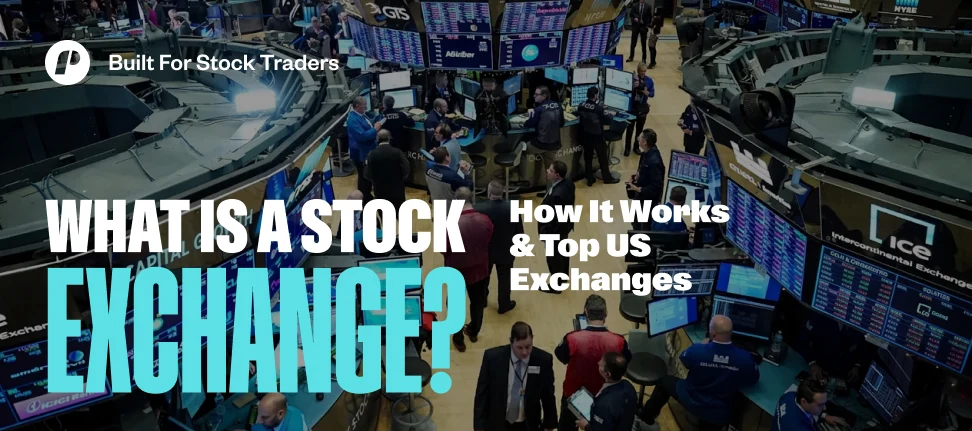
A stock exchange sets the public bid and ask that every US broker shows on a trading screen. A beginner who clicks buy at $50.00 and gets filled at $50.04 usually suspects an error by the broker.
The broker made no mistake: $50.00 was the highest bid, and $50.04 was the lowest price any seller offered. A market buy order pays the ask unless a venue improves the price, and here no venue did.
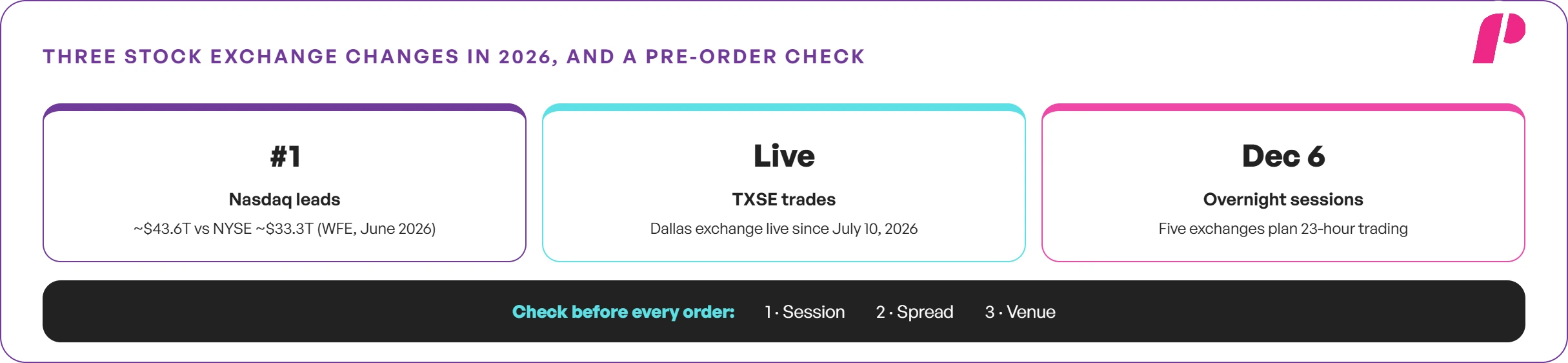
Meanwhile, the venues changed in 2026, starting with a Dallas exchange that began live trading on July 10. World Federation of Exchanges data for June 2026 also ranks Nasdaq first by market value, ahead of the NYSE.
Stock exchange hours change next, as five exchanges plan overnight sessions starting December 6, 2026. An order placed at 2:00 a.m. meets a thinner book than at 10:00 a.m., because fewer traders are active overnight.
🔗 Market Orders vs Limit Orders: Which One to Use
Where Orders Actually Meet
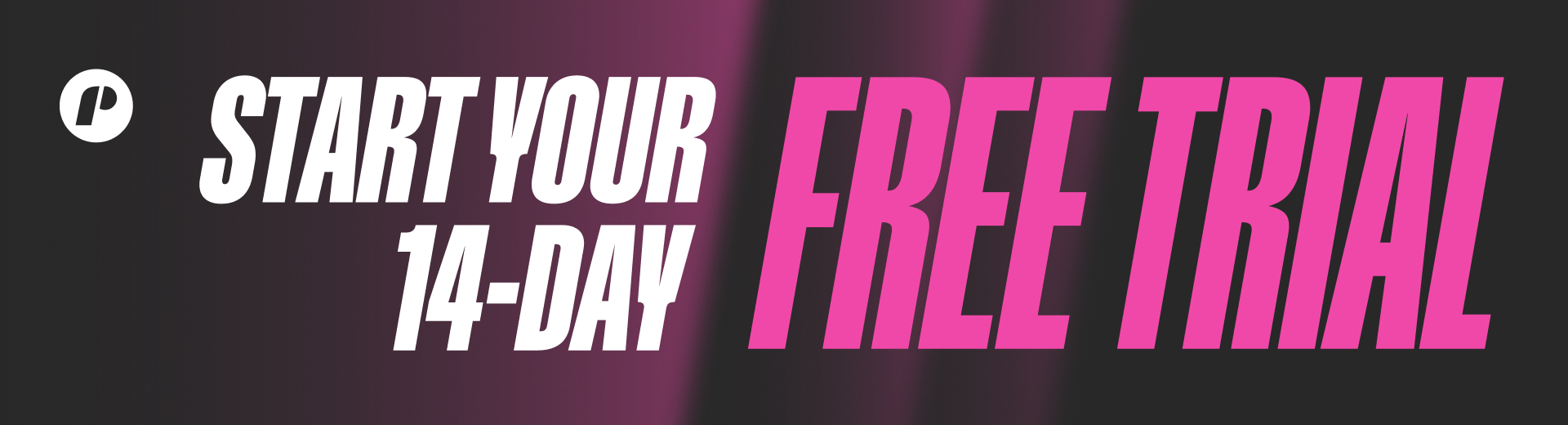
Retail traders reach the market through broker apps, and most order screens never name an exchange. That hidden layer is why new traders still search “What is a stock exchange?” after opening a brokerage account.
An exchange is an organized market where buyers’ and sellers’ orders for listed securities meet and match under public rules. “Public” means the SEC examines each rule change, and members trade using the same order types and tick sizes.
Furthermore, exchanges send every quote and trade to the securities information processors, which feed the consolidated tape. A retail app and a hedge fund terminal both display that tape’s national best bid and offer for Apple.
The exchange never takes the opposite position in a transaction, since it acts as a neutral intermediary earning fees. As a result, businesses gain the confidence to list their stocks and raise funds from the public.
What This Guide Covers:
- SEC registration of national securities exchanges
- Price-time matching and the bid-ask spread
- Nasdaq’s lead in June 2026 WFE data
- The 50.6% off-exchange share of 2025 volume
- Overnight sessions planned for December 6, 2026
What Is A Stock Exchange? Definition And Short History
Any stock exchange definition starts with a physical place where merchants agreed to trade shares under shared rules. Students of market history often ask “What is the oldest stock exchange?” when they trace that idea back.
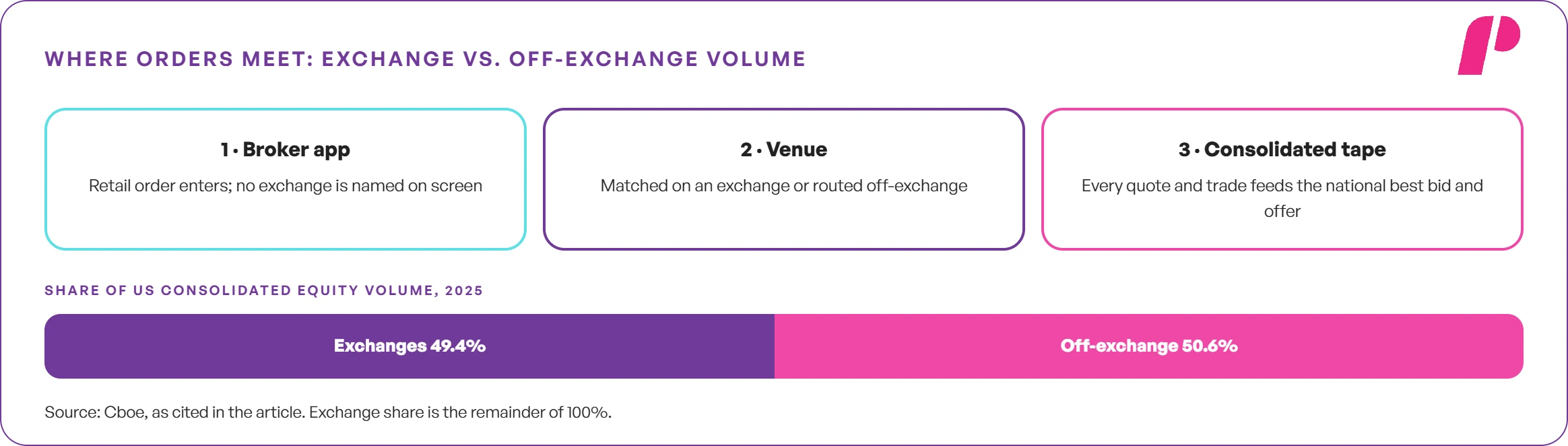
Most historians name Amsterdam, where shares of the Dutch East India Company began trading in 1602. New York followed in 1792, when 24 brokers signed the Buttonwood Agreement under a tree near 68 Wall Street.
However, those brokers policed only themselves, and the 1929 crash exposed how little that system protected outside investors. Congress passed the Securities Exchange Act of 1934 in response, and that law created the SEC to supervise exchanges.
Today, the SEC registers every national securities exchange, which settles the question “Who regulates stock exchanges in the US?” Its register answers “How many stock exchanges are there in the US?” with 29 names in October 2026.
🔗 Who Regulates US Stock Trading? SEC and FINRA Explained
Stock Exchange Vs Stock Market: The Key Difference
It is common for new investors to consider the stock market and the exchange as a single entity, which hides the location of order execution. As a result, the confusion hides who writes the rules and why one stock trades on many venues.
For anyone asking “What is the difference between a stock market and a stock exchange?” the split is about scope. The stock market is the system for trading shares, while an exchange is one regulated venue inside it.
Companies first sell shares to investors in the primary market, usually through an initial public offering. That primary versus secondary market split matters, since day and swing traders operate only in the secondary market.
The question “How does a company get listed on a stock exchange?” has a three-step answer for most companies. First, the company meets the exchange’s listing standards, then it files with the SEC and sells shares in an IPO.
🔗 IPO Explained
Financial Market Structure & Trading Terminology
| Market Term | Definition & Operational Description | Practical Market Example |
|---|---|---|
| Stock Market | The comprehensive global ecosystem and system for trading corporate shares | All United States equity trading activity |
| Regulated Exchange | A centralized, licensed venue that officially matches buyer and seller orders | New York Stock Exchange (NYSE), Nasdaq, Texas Stock Exchange (TXSE) |
| Off-Exchange Trading Venue | Alternative trading systems executing transactions away from lit public exchanges | Market-maker wholesalers and institutional dark pools |
How A Stock Exchange Works
The Order Book, The Bid, And The Ask
Every exchange runs an order book, a live list of buy and sell orders at each price. Readers who ask “How does a stock exchange work?” can start with that book, since it drives every match. Buyers post bids, sellers post asks, and most exchanges fill orders by best price first, then by arrival time.
Say a buyer offers $50.00 and a seller asks for $50.04 — that leaves a tiny 4-cent gap between them. That gap answers “What is the bid-ask spread on a stock exchange?” and it is a direct trading cost. A market buy order pays $50.04 at once, while a buy limit at $50.00 waits for a seller.
🔗 Bid-Ask Spread Explained for Stock Traders
Hence, popular stocks usually exhibit a one-cent spread, whereas unpopular stocks have a spread of a few cents. On the other hand, the answer to “How do stock markets earn?” is trading fees, listing fees, and market data revenues.”
Order Book Depth & Market Liquidity
| Order Book Side (Bid / Ask) | Limit Price | Available Share Volume |
|---|---|---|
| Ask (Level 2 Offer) | $50.06 per share | 300 shares |
| Ask (Inside Market Offer) | $50.04 per share | 500 shares |
| Bid (Inside Market Buy) | $50.00 per share | 400 shares |
| Bid (Level 2 Support) | $49.98 per share | 600 shares |
On-Exchange Vs Off-Exchange Trading
Off-exchange transactions include wholesale trades and any others that are executed off the public exchanges. Traders often ask “Does my order go straight to the NYSE or Nasdaq?” before they review a fill report. Often it does not: off-exchange venues handled 50.6% of US consolidated equity volume in 2025, according to Cboe.
🔗 Dark Pools and Off-Exchange Trading Explained
Brokers send many retail orders to wholesalers, so traders judge fills against the national best bid and offer.
Traders also ask “What is the difference between a stock exchange and OTC trading?” and the answer centers on transparency. Exchange orders meet in a public order book, while OTC trades happen directly between two parties or through a dealer.
Readers then ask, “Is trading on a stock exchange safe?” and the answer is partly, since clearing reduces counterparty risk. However, no exchange protects a trader from price moves, and losses remain possible on every trade.
The Major US Stock Exchanges In 2026
Cboe, IEX, MEMX, and a new Texas exchange run US equity venues, but two older exchanges dominate listings. “The major stock exchanges in the US are…” This question opens with the NYSE and Nasdaq exchanges. Unlike Nasdaq, however, the NYSE maintains a trading floor where the market makers conduct auctions for certain stocks.
Nasdaq launched on February 8, 1971, as an electronic quotation system and became a registered exchange in 2006. Those two models answer “What is the difference between the NYSE and Nasdaq?” and Table 3 adds the details. The answer to “What is the Texas Stock Exchange?” is an SEC-registered Dallas exchange that began trading July 10, 2026.
🔗 The Texas Stock Exchange Explained
Traders often ask “Which stock exchange is best to trade on?” though retail traders rarely pick the venue themselves. Brokers route orders under best-execution rules, so a stock’s liquidity and spread matter more than its listing venue.
NYSE vs Nasdaq Vs The Texas Stock Exchange
Major Stock Exchanges Comparison
| Stock Exchange | Inception Date | Trading Model & Execution Structure | Listed Companies (January 2026, WFE) |
|---|---|---|---|
| New York Stock Exchange (NYSE) | 1792 | Hybrid floor and electronic model with designated market makers (DMMs) | 2,143 companies |
| Nasdaq Stock Market | February 8, 1971 | Fully electronic since inception; operating as a national securities exchange since 2006 | 3,356 companies |
| Texas Stock Exchange (TXSE) | July 10, 2026 | Fully electronic next-generation exchange platform | Phasing in company listings from late 2026 |
The Largest Stock Exchanges In The World
Analysts usually rank exchanges by domestic market capitalization, the combined value of the domestic companies listed there. Readers asking “What is the largest stock exchange in the world?” get Nasdaq, according to the World Federation of Exchanges. For example, WFE figures for June 2026 put Nasdaq near $43.6 trillion and the NYSE near $33.3 trillion.
🔗 What Is Market Capitalization?
However, many older guides still name the NYSE first, because that ranking held for decades before Nasdaq’s recent climb. The gap moves every month with share prices, so any ranking needs a stated month and a named source.
Shanghai ranked third in the same June data at about $10.0 trillion, ahead of Japan Exchange Group at $8.7 trillion. Together, Nasdaq and the NYSE held about 46% of the $167.8 trillion listed across exchanges that the WFE tracks. Euronext, Shenzhen, and Hong Kong Exchanges and Clearing complete the top seven, as the next Table shows.
Global Stock Exchanges
| Stock Exchange | Country / Region | Domestic Market Capitalization (USD) |
|---|---|---|
| Nasdaq Stock Market | United States | $43.58 trillion |
| New York Stock Exchange (NYSE) | United States | $33.29 trillion |
| Shanghai Stock Exchange (SSE) | China | $9.97 trillion |
| Japan Exchange Group (JPX) | Japan | $8.72 trillion |
| Euronext | Europe (Multi-country) | $8.33 trillion |
| Shenzhen Stock Exchange (SZSE) | China | $7.34 trillion |
| Hong Kong Exchanges and Clearing (HKEX) | Hong Kong | $5.53 trillion |
Stock Exchange Trading Hours And The New Overnight Session
Liquidity in US stocks clusters around the opening and closing auctions, so session times shape trading costs. Traders checking “What time does the stock exchange open and close?” will find one regular session on weekdays.
Its hours of operation are from 9:30 a.m. to 4:00 p.m. (Eastern Time) from Monday to Friday, excluding published market holidays. Pre- and post-market trading expands its hours of operation to 4:00 a.m. to 8:00 p.m., but with much fewer stocks traded.
Coverage of 23-hour stock trading now prompts a newer question: “Is the stock exchange open 24 hours?” Not yet: the SEC conditionally approved 23-hour trading on 24X, Cboe EDGX, MEMX, Nasdaq, and NYSE Arca.
🔗 Nasdaq 24/7 – Hour Trading: What It Means for Stock Traders
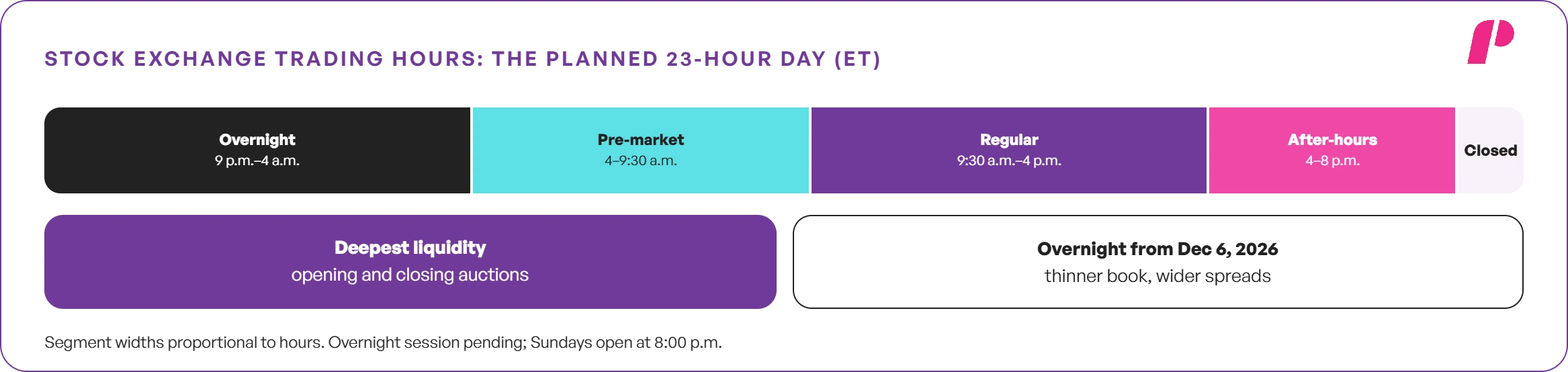
Meanwhile, overnight stock trading waits on consolidated data feeds, which the exchanges expect to have ready by December 6, 2026. Therefore, the overnight book will hold far fewer orders, and spreads on most stocks should run wider than at midday.
- 4:00 to 9:30 a.m. ET: pre-market on Nasdaq and NYSE Arca
- 9:30 a.m. to 4:00 p.m. ET: regular session, weekdays
- 4:00 to 8:00 p.m. ET: after-hours session
- 9:00 p.m. to 4:00 a.m. ET: overnight from December 6, 2026; Sundays open at 8:00 p.m.
How Traders Access A Stock Exchange And Where Funded Accounts Fit
Every retail order passes through a broker, and the broker decides where that order finally executes. New traders ask “Can I trade directly on a stock exchange?” once they learn about routing and wholesalers. No: only registered broker-dealers can join an exchange, and a small broker account brings its own limits on size.
🔗 What Is a Funded Stock Trading Account?
Readers ask “Can you get rich trading on the stock exchange?” and no exchange, strategy, or firm can promise that. For example, Chague and colleagues found that 97% of Brazilian futures day traders persisting 300-plus days lost money.
Their sample covered individuals who began day trading those futures contracts between 2013 and 2015 in Brazil.
Traders asking “How can I trade stocks without a lot of money?” can use a broker account or fractional shares. Trade The Pool, a stock prop firm, offers a third route with evaluation fees, fixed rules, and no guaranteed payouts.
Retail Proprietary Trading Program Parameters
| Proprietary Trading Program Tier | Profit Target (%) | Daily Pause Limit (%) | Maximum Loss Limit (%) |
|---|---|---|---|
| Day Trade Flex Program | 6.0% | 2.0% | 4.0% |
| Day Trade Max Program | 6.0% | 1.0% | 3.0% |
| Swing Flex Program | 15.0% | 3.0% | 7.0% |
| Swing Max Program | 15.0% | 3.0% | 7.0% |
Limits are percentages of buying power, per tradethepool.com, October 14, 2026; Hub trading is simulated.
Final Thoughts On The Stock Exchange
A stock exchange turns scattered buy and sell interest into one public price, and every US quote starts there. Many retail orders execute at wholesalers or in dark pools, and those fills still price off it.
That link explains why the session and the spread decide the real cost of opening a position. Furthermore, 2026 brought three changes: Nasdaq leads by value, TXSE trades live, and five exchanges plan overnight sessions for December.
As a result, a trader benefits from checking the session, the spread, and the venue before each order. A trading journal makes that habit concrete, since it records every fill next to the quote at entry.
🔗 The 7 Things We Love the Most about Tradersync
Trade The Pool runs a single evaluation stage for stock traders, with a daily pause and a maximum loss limit. Traders can review the program terms, compare account options, and decide whether a funded stock account fits their plan.
Review the Trade The Pool program terms and account options.
If you liked this post make sure to share it!