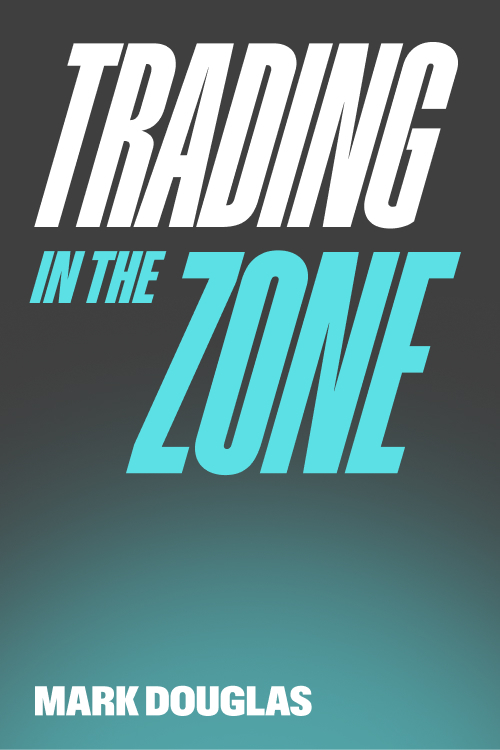
Long before the book introduces indicators or strategies, it poses a deeper question. From what inner position does a trader truly operate? The central issue, as Mark Douglas argues, is not technique or information. It is the way a trader perceives risk. It is how they process loss and interpret uncertainty. Across its chapters, he does not present a simple formula for winning. Instead, he offers an honest and demanding examination of the mental barriers that prevent consistency. This book functions less as a technical manual. It is more of a mirror, confronting the beliefs and emotions that shape behavior. It is a definitive guide to the inner game of trading, where the most significant battles are fought and won.
The book is a deep dive into the psychological landscape of a trader. Every reaction to the market reflects an internal state. Impulsive optimism and paralyzing fear are two sides of the same coin. Douglas, therefore, directs our attention away from controlling the market. The true goal is the mastery of the self. The core philosophy is that the ability to predict the market does not determine success. Instead, the ability to manage one’s own mindset determines it. A trader must align their internal reality with the external market probabilities. Douglas’s work asks you to look inward. It requires you to be brutally honest about what you find. This honest self-assessment is the first and most critical step toward consistent profitability.
Chapter 1: The Road to Success
In this section, we analyze the three stages of a typical trader’s evolution. Douglas deconstructs the limits of fundamental and technical analysis to reveal that the final, essential component is a disciplined trading mindset.
Fundamental, Technical, or Mental Analysis?
Many traders enter the markets convinced that external knowledge is decisive. They often begin with fundamental analysis. They interpret financial statements and monitor economic news. This approach focuses on an asset’s supposed “value.” However, it is often a frustrating endeavor. The market’s behavior frequently disconnects from the underlying fundamentals. Drawn later to charts rather than reports, traders turn to technical analysis. They come to believe that market patterns conceal the path to success. They spend countless hours studying indicators and systems. They believe the perfect predictive formula is just around the corner. They search for certainty in an environment that offers none.
Yet, a more difficult question eventually arises. Why do losses persist despite this accumulated knowledge? A trader might possess a flawless strategy. They may have all the information in the world. They still, however, find themselves making impulsive, unprofitable decisions. Mark Douglas contends that charts or data rarely resolve this question. The actual barrier, and the path forward, lies not in information. It lies in one’s mindset. Mental analysis, long neglected, emerges as the missing component. It is the capacity to trade without fear. It is the ability to act without rigid expectations. It is the skill of executing a plan without self-inflicted interference. The journey to success is an internal one.
Chapter 2: The Lure (and the Dangers) of Trading
Here, we explore the powerful psychological appeal of trading. Douglas explains how the market’s structure can create addictive behaviors by reinforcing undisciplined actions with random positive outcomes.
The Psychology of Random Rewards
The promise of defeating the market with a single click is powerful. Trading from home, without superiors, carries undeniable appeal. For many, it suggests a direct path to financial freedom. This allure is a strong motivator. However, it also creates a significant psychological trap. The market can provide random rewards. The market’s ability to provide random rewards makes it a highly addictive environment. It can reward bad behavior just as often as good behavior. This process, in turn, reinforces a false and dangerous sense of skill. A trader might win on an impulsive trade. Winning on an impulsive trade enhances the belief that a plan is not truly necessary. It may lead to a period of undisciplined, reckless trading.
The threats in this environment are therefore primarily psychological in nature. A trader may engage the market without defined rules. They may shift blame rather than assume responsibility. They often chase immediate, emotional outcomes. Most deceptively, they succumb to the addictive pull of random rewards. These are not technical failures. They are profound psychological ones. No method, regardless of its statistical merit, can withstand them unresolved. Douglas maintains that the essential safeguard is self-awareness. Reading the market is simply insufficient. The trader must first learn to read the self. The gravest danger is not the loss of one position. It is the gradual erosion of internal discipline and control.
Chapter 3: Taking Responsibility
This analysis focuses on a critical step in a trader’s development: shifting the locus of control from external events to internal choices, thereby transforming blame into an opportunity for growth.
The Market as a Mirror
Traders often assign blame to the market. They point to unexpected news events or their broker. Traders often assign blame when results turn unfavorable. Mark Douglas confronts this tendency with a brutal truth. As long as you project control outward, genuine progress remains impossible. Taking responsibility is not the passive acceptance of fault. It is the active recognition of one’s authority to change. A trader who blames the market is a victim of circumstance. They have no power. A trader who takes responsibility for their results, in contrast, is in a position to learn. They can adapt and improve their process over time. They have agency.
The chapter develops a central claim. Every trading outcome originates from an internal source. Your reactions to loss are not random. Your interpretation of a winning streak is not objective. The impulse to disrupt a sound strategy is not a matter of chance. These are all expressions of ingrained mental patterns. The market reflects these patterns to you as if in a mirror. For example, a trader who feels a need to prove their worth might take on excessive risk. A trader who fears losing might exit a profitable position too early. These are not technical errors. They are psychological ones. The pursuit of consistency begins when the trader abandons justification. They must turn to honest observation instead.
Chapter 4: Consistency – A State of Mind
Here, we explore the core argument of the book. Douglas redefines consistency not as a product of a perfect system, but as a stable, disciplined mindset that allows for flawless execution under pressure.
Cultivating an Internal Framework
Many traders assume that consistency is the product of a flawless strategy. In this chapter, Mark Douglas challenges that belief. He argues for something much more profound. Consistency is not a technical formula. It is a mental state. It is the ability to act without allowing emotion to distort your judgment. A trader’s ability to act without emotion must be actual even when outcomes remain completely uncertain. The consistent trader has a clear, tested plan. They also possess the discipline to follow it. This execution is independent of the result of any single trade. It is a process-oriented approach. The professional focuses on perfect execution. The amateur focuses only on the profit or loss.
To think like a trader is not merely to analyze charts. It is to accept that any trade can result in a gain or loss. Accepting any gain or loss must happen without disrupting one’s internal framework. This profound acceptance of risk requires more than just calculating it. It demands a profound psychological acceptance of it. The consistent trader does not seek to eliminate uncertainty. They learn to engage with it through a stable and deliberate mindset. They understand that a loss is a regular part of the business. It is not a personal failure. This chapter is a call to stop searching for security in the market. You must cultivate it within yourself. When your mind becomes the most ordered element in your system, the market becomes a field of opportunities.
Chapter 5: The Dynamics of Perception
This section examines how a trader’s personal history, beliefs, and emotional state act as an invisible filter, shaping how they interpret objective market data and often creating self-sabotaging behavior.
The Mind as a Filter
What appears on a price chart is not reality itself. It is the version that our conditioned minds register. In this chapter, Mark Douglas examines perception as both an instrument and a trap. Every trader approaches the market with a mental framework. Their beliefs and past experiences shape this framework. These internal factors filter market events, often without any conscious recognition. This framework can be a significant and unseen source of bias. Therefore, what you see on the chart is not the pure data. It is the data interpreted through your unique psychological lens. A trader must understand this process to achieve clarity.
Emotion and memory directly influence how a trader judges signals. They also affect how a trader executes trades. For example, two traders may face the same chart. They may arrive at completely opposing conclusions. The divergence lies not in the data itself. It lies in their internal, interpretive lens. As Douglas makes clear, that lens is less a reflection of price. It is more a reflection of a person’s own history. A trader who had a bad experience with a stock might perceive a bullish signal as a threat. Consistency, therefore, requires refining this internal framework. The trader must retrain their mind to register what is actually present. It must stop projecting what fear or desire suggests is there.
Chapter 6: The Market’s Perspective
Here, we analyze a fundamental shift in perspective. Douglas urges traders to stop projecting their own emotions onto the market and instead to accept its true nature: a neutral, impersonal, and probabilistic environment.
Trading in the “Now” Moment
The market carries no memory of your last trade. It has no emotion and no intent toward you. Yet, traders often personify it. They act as if it were capable of granting reward or imposing punishment. Mark Douglas argues for a fundamental psychological shift. You must stop imposing a personal frame on market events. Instead, you must learn to approach the market according to its actual nature. A trader might say, “The market is out to get me.” However, the market is a neutral system. It is entirely unaware of any individual trader. It simply facilitates the actions of its participants. All price movement is a reflection of this collective force.
At its essence, the market is pure, unadulterated uncertainty. Each moment stands alone, unique and independent of the last. The professional pursuit of absolute certainty is therefore futile. Recognizing this does not mean trading without a structure. It means constructing an approach grounded in probability. A trader does not base this approach on emotional prediction. The market owes the trader nothing. A trader’s expectations have no bearing on the outcome of a trade. Douglas contends that real progress begins when traders release this illusion of control. They must adopt a neutral, detached perspective. Once you accept that the market owes you nothing, trading becomes an exercise in freedom. This freedom removes the emotional weight that so often undermines performance.
Chapter 7: The Trader’s Edge
This section explores the book’s central thesis. A trader’s edge comes not from predicting single outcomes, but from cultivating a mindset that can execute a system with a statistical advantage over an extensive series of trades.
Thinking in Probabilities
Probability-based thinking is not an intuitive human skill. Environments that reward certainty shape our experience. Correct choices are presumed to produce favorable outcomes. In the financial markets, however, that assumption completely fails. Mark Douglas argues that a true trading edge belongs to a specific group. It does not belong to those who are consistently right. It belongs to those who recognize that success derives from repetition. It is not about isolated prediction. The professional trader operates like a casino. They know they have a slight edge. They also know that edge only works over a large sample size. They do not become emotionally invested in any single outcome.
Each trade you take carries inherent uncertainty. The relevant measure is not whether the position yields a profit or loss. It is whether you executed it within a disciplined and repeatable framework. Consistency develops when traders accept a crucial truth. A sound decision may still result in a loss. Pure chance may occasionally reward an unsound decision. This acceptance alters not only the mechanics of trading. It also changes the emotional posture toward the market. The trader no longer interprets outcomes as a personal betrayal. They no longer feel compelled to recover losses immediately. When viewed through probabilities, each trade becomes a single component within a larger statistical sequence.
Chapter 8: Working with Your Beliefs
Here, the analysis turns to the practical work of identifying and altering the core beliefs that govern a trader’s behavior, framing this process as a conscious “re-education” of the mind.
Reshaping the Mental Software
A set of beliefs shapes every decision a trader makes. These beliefs operate unconsciously. They define what is possible, what is dangerous, or what ought to occur. In this chapter, Mark Douglas encourages traders to regard these beliefs as filters. They are not absolute truths. They are just the mental software that frames their encounter with risk. This software runs in the background. It shapes a trader’s perception of the market, often without their consent. The problem emerges when such beliefs remain unexamined and unchallenged. Some may prove helpful in other contexts. They can, however, become restrictive in trading.
Identifying, questioning, and reshaping these assumptions is essential work. It is necessary for any trader seeking clarity and control. For example, a belief that “I can’t be wrong” is a significant source of self-sabotage. It leads to holding losing trades for too long. Douglas does not offer simple therapy. He proposes a method of re-education. This method of re-education is a process of internal adjustment. It helps so that your beliefs no longer obstruct what is actually unfolding in the market. Until a trader aligns those beliefs with the realities of trading, their decisions will reflect prior assumptions. They will not reflect the real opportunities the market presents.
Chapter 9: The Nature of Beliefs
This section delves deeper into the origins of our mental frameworks. Douglas explains that beliefs are not products of logic, but are charged with emotional energy from past experiences, making them highly resistant to change.
How Beliefs Are Formed
Calm, rational analysis does not form beliefs. Emotional impact forges them. A single, powerful experience can so profoundly impress an idea that it becomes ingrained. It then becomes an internal and unquestioned truth. In this chapter, Mark Douglas examines how one event can establish a belief. That belief then shapes every future market interpretation. This shaping of interpretation often happens without the trader’s conscious awareness. For example, a trader who experiences a significant and unexpected loss may develop a core belief. They may come to believe that the market is inherently treacherous. This belief then colors all of their future decisions. They may hesitate on good setups or exit winning trades prematurely.
The danger lies not in having beliefs. It lies in mistaking those beliefs for objective facts. A limiting belief can act as an unseen barrier to success. Associating a single loss with personal incompetence, for instance, may prevent rational decision-making in the future. Douglas shows that beliefs do not just filter the present. They also construct the trader’s future. They do this by defining what is perceived and what actions are permitted. The task is not to eliminate all beliefs. It is to understand their origins. You must then reshape them when they no longer serve their purpose. Markets shift daily. Yet many traders operate from fixed, rigid assumptions.
Chapter 10: The Impact of Beliefs on Trading
Here, we analyze how unexamined beliefs directly create trading results. Douglas illustrates that a trader’s performance will almost always align with their deepest convictions about themselves and the market.
The Self-Fulfilling Prophecy
A belief does not need to be true to exert a powerful influence. Once a trader accepts an idea as real, it shapes their behavior at the screen. In this chapter, Mark Douglas illustrates how beliefs operate as invisible codes. They program perception. They constrain decisions. They often reproduce unwanted results without any apparent external cause. For instance, a trader who believes they are not deserving of success will find ways to sabotage their own efforts. They might miss an entry or exit a winning trade too soon. This act of self-sabotage is not a technical error. It is their internal belief system that creates a self-fulfilling prophecy.
The issue is not simply a matter of positive thinking or confidence. Beliefs, when they are rigid or contradictory, generate internal conflict. This conflict leads to self-sabotage. You might see premature entries or exits driven by fear. You may notice an excessive tendency to take risks or a tendency to become paralyzed in the face of doubt. What makes these patterns so challenging is their appearance. Such responses rarely seem like technical errors. They present themselves as “normal reactions” to market events. A trader repeats these responses without any apparent reason. Douglas stresses that confronting these mental structures is not optional. It is essential for achieving consistency. Until a trader examines what they believe about themselves, their performance remains governed more by assumptions than by skill.
Chapter 11: Thinking Like a Trader
The final chapter synthesizes the book’s lessons into a single, powerful mindset. Douglas argues that professional traders operate like a casino, focusing on their statistical edge rather than the outcome of any single event.
The Casino Mindset
Thinking like a trader is not simply about following rules. It is about redefining one’s relationship with uncertainty. In this final chapter, Mark Douglas argues for a new mindset. The mindset of the consistent trader does not emerge from external control. It comes from an internal discipline. This discipline is grounded in accepting risk as a natural and necessary element of the game. Risk is not something a trader should avoid. It is something a trader must manage. The early stage of trading is often mechanical. You learn a system and execute it as best you can. The fundamental shift, however, occurs later. It happens when the trader stops seeking guarantees. They begin to trust the process instead.
That trust is not blind faith. It is a deep recognition that the outcome of a single trade is meaningless. A real advantage is built only through the collective weight of many repeated decisions. Douglas closes with a critical exercise: to operate as a casino does. A casino has a slight statistical edge. It does not know the outcome of any single hand of blackjack. It does not care. It knows that over thousands of hands, its edge will prevail. By releasing the ego from the need to be right on every trade, the trader can focus on executing their system consistently. In that emotionless and straightforward repetition, a trader finally finds proper consistency.
Final Reflection
The conclusion of this book does not deliver easy certainty. It marks a point of departure for the serious trader. Trading in the Zone does not prescribe final answers. It provides a framework through which traders can develop their own answers internally. Mark Douglas underscores that consistency is not the outcome of a flawless system. It is the outcome of becoming the kind of trader who can execute any system without distortion. Executing a system without distortion means acting without the interference of fear, euphoria, or regret. This internal state is the ultimate goal. Without it, even the best system will fail. With it, even a simple system can produce remarkable results.
In a domain where uncertainty is the only constant, two things matter most. Clarity of thought and disciplined execution constitute the closest approximation to control. The alignment of the trader’s mind with the actual realities of the market becomes the most durable edge. The alignment of the trader’s mind with market realities is the final and most important lesson of the book. The path to professional trading is not an external search for a perfect method. It is an internal journey. It is about reshaping your own mind until it becomes your greatest asset.