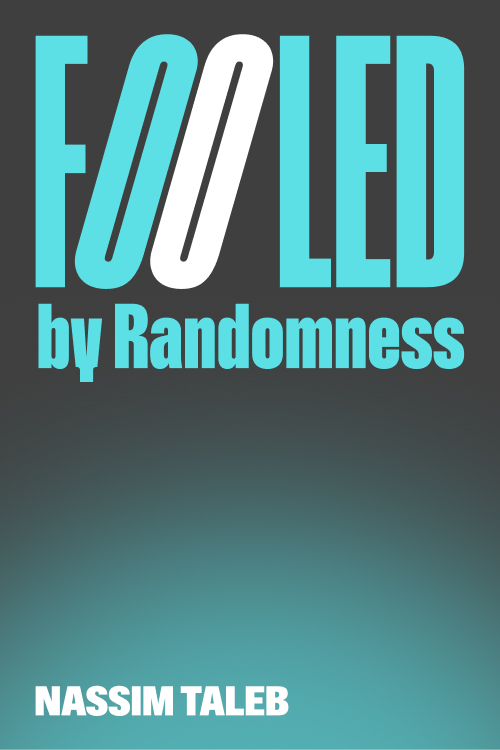
Luck governs countless aspects of our daily lives, influencing many outcomes. Therefore, we often let fate decide what will ultimately happen next, consequently losing control over what we truly desire. Life is full of parameters strongly influenced by chance events. Consider the astute investor who foresaw a major crisis coming. Think about the Silicon Valley prodigy who successfully built a powerhouse company. Imagine the athlete who triumphed despite overwhelming adversity. But what if pure luck, not brilliance or foresight, explains many of these compelling narratives? We must immediately understand this profound influence, Fooled by Randomness.
The Illusion of Control: How We Are All Fooled by Randomness
We often imagine success as a simple, predictable equation—the natural outcome of intelligence, hard work, or a sound strategy. However, Nassim Nicholas Taleb’s Fooled by Randomness strikes us with a shocking reality. We live in a world deeply steeped in uncertainty. Chance exerts far more influence than we care to acknowledge. The real problem is not just that we minimize randomness. Instead, when we detect randomness, we immediately distort it into something meaningful. We delude ourselves with after-the-fact rationalizations, confusing mere coincidences with clear cause and effect. This action obscures the actual presence of randomness. Consequently, this denial remains a key intellectual flaw.
This necessary book serves as a vital wake-up call regarding randomness. Taleb powerfully compels us to question what we currently take for granted every single day. For example, how many Wall Street “brains” are simply fortunate souls who elude the cold mathematics of probability? How many of our supposedly reasoned life decisions are actually pure chance? As you carefully read these pages, see the world not as a predictable chessboard where you calculate every move, but as a chaotic casino where randomness rigs the game. Ultimately, we are all genuinely susceptible to being fooled by randomness.
Part I: Solon’s Warning – Skewness, Asymmetry, Induction in Fooled by Randomness
This section explores the profound impact of chance events. Taleb argues that we drastically underestimate randomness. We see patterns and skill where only luck truly exists. Therefore, we are often fooled by randomness itself. Part I sets the foundational concepts: asymmetry of outcomes, the danger of inductive reasoning, and the misleading nature of survivorship bias. Success often obscures the underlying instability caused by randomness. Consequently, we must learn to identify the subtle signs of randomness steering our results. This fundamental understanding prepares us for life’s most profound uncertainties.
The Foundations of Randomness and Caution
Solon, the ancient Athenian statesman, warned against evaluating a person’s life before it concludes. Why? Misfortune can easily erase a lifetime of outstanding achievement. This vital concept launched Fooled by Randomness and immediately captured attention. Taleb explores how we repeatedly misjudge the influence of mere luck, particularly when forming broad judgments from narrow experiences. Picture discovering an ideal investment approach, then watching it collapse because you overlooked the massive force of chance. Part I reveals the pitfalls of inductive reasoning and underscores the effect of asymmetry. If the possibility of randomness steering more outcomes disturbs you, dive into Part I.
Wealth and Skill: The Role of Randomness
Imagine two traders: Nero Tulip and John. Nero is a calm trader with a real talent for spotting financial danger; he is financially stable but not a tycoon. Next, there is John, the high-roller who hauled in millions trading shaky bonds until—wham!—a market crash flattened him quickly. Taleb weaves their stories to reveal how luck, or simple randomness, can masquerade as genuine brilliance in high-stakes realms. One unexpected jolt can turn everything topsy-turvy. Solon’s caution rings true: fate and randomness have a twisted sense of humor.
Nero maintains his calm, even when the heat is on full blast. John, however, loses his swagger when reality smacks him. Taleb’s powerful message is clear: we eagerly pin medals on the wealthy and label them as geniuses without adequate thought. But in a contest swayed fundamentally by chance and randomness, that is a true novice blunder. The real skill is simply keeping your wits while the dice of randomness tumble.
Alternative Histories and Pure Randomness
Have you pondered the paths you never chose? Taleb hauls us into the dizzying game dubbed “alternative histories,” demonstrating the complete scope of randomness. Imagine playing Russian roulette. You squeeze the trigger five times; nothing fires, and you swagger off as a victor. However, what about that sixth pull you skipped? That might have ended everything by chance. Taleb’s accounting trick tallies not only what occurred but also what might have happened by sheer luck. He insists that the true story lies hidden in those unseen “what-ifs”—the crafty possibilities of randomness we shrug off easily because they have not yet struck.
This focus on randomness is raw and authentic. Taleb’s debate loss shows how hard it is for people to accept these truths; they constantly crave simple fixes. His French buddy, Jean-Patrice, clashes with Taleb’s chaotic, chance-fixated lens. Solon, in Taleb’s mind, nudges us to swap sparkle for doubt about randomness. The experience reveals that the sharpest insights about randomness do not always click right away. Taleb powerfully challenges us to sneak a look beyond the veil of life’s disorder. Believe me, you will itch to check out the profound implications of randomness.
Simulating History and Unmasking Randomness
Taleb unleashes Monte Carlo simulations—a wizard’s chest constantly churning out phony histories to rattle our minds about randomness. He pits a slick “Europlayboy” mathematician against the gritty Monte Carlo gang, who toss dice to sketch out what could unfold because of randomness. Visualize a trader’s saga: one route lands him toasting champagne; another leaves him busted—same talent, different fate determined by randomness. Taleb wields this simulation to rip apart the common notion that history is a neat yarn. It is closer to a casino pit, humming with luck and randomness. He aims to show that the past is not as polished as your teacher claims.
Taleb conjures “Zorglubs,” representing might-have-been flickers of randomness we never fully spot. He critiques big shots who treat history like a sealed book. He uses stove scars and market crashes to shout, “Look! It is all a gamble with randomness!” Solon, his loyal wingman, prods us to distill the mayhem into insights. It is a truth bomb about randomness. Furthermore, Taleb urges us to ditch the simple bedtime stories and tango with chance and raw randomness. It is cerebral, it is brash, and it will make you reconsider everything you thought you grasped about yesterday’s supposed lack of randomness.
Science, Nonsense, and Hidden Randomness
Taleb hosts a thought experiment where scientists clash with bookish souls. He pulls off a slick stunt: a flipped Turing test. He uses a Monte Carlo algorithm to generate nonsense poetry mimicking Baudelaire. The artsy bunch immediately starts digging for deep meaning in the jumble. Meanwhile, Taleb snickers, knowing it is all pure chance or randomness. He labels hotshots like Hegel the grand champions of phony wisdom. It is a face-off pitting crisp, sharp science against the hazy pull of drivel. Taleb favors the white coats who can slice through the pervasive haze of apparent patterns in randomness.
The mood gets spicier as he riffs on how we constantly mix up noise with meaning. He is relishing every bit of this challenge, spinning his own Monte Carlo lines. He is jabbing at the “science wars” where lofty buzzwords try to eclipse straight-up facts. This chapter is a zany blend of mind treats and gut giggles. Taleb nudges us to savor randomness’s odd appeal strongly. It is a powerful reality check tucked in a smirk. Once you clearly catch the absurdity of mistaking noise for signal in randomness, you cannot unsee it ever again.
Evolution, Survival, and Randomness
Meet Carlos, the smooth-tongued trader. He snaps up bonds and is riding high—money pouring, ego skyrocketing—till 1998 crashes the party. Russia defaults, torching his golden kingdom by random chance. Next up is John, whose slick formulas and swagger fail when his wagers tank too, leaving him stunned in the rubble of randomness. Taleb shows how, in wild turf like trading, it is not always the brightest who thrive. Often it is the gutsy, the clueless, or just the downright fortunate who benefit from randomness.
He suggests that evolution itself might be tripping over the same snag, letting random quirks call the shots. Toss out that glossy “survival of the fittest” spiel. Life is sloppier with randomness than that theory suggests. Evolution is not a smooth parade of preordained victors. It is a crazy raffle where a fluke twist of randomness can hoist the longshot high. Those scarce, earth-shaking instants—like a market plunge—reshuffle the cards. All of a sudden, the “least fit” are hanging on, and the “top dogs” are dust, proving the sheer power of randomness. It is a mind-blowing spin that upends all you thought you understood.
Skewness: The Asymmetrical Nature of Randomness
Taleb plunges into “skewness,” life’s crafty habit of tipping the balance. Skewness ensures that gains and setbacks do not even out due to randomness. Imagine a trader stacking up small wins all year long, feeling invincible. Then, one wild jolt—a market crash—drowns him in a flash. Taleb insists the world is not a neat teeter-totter, but a crooked monster where rare disasters caused by randomness can eclipse all else quickly. He mocks Wall Street’s bull-and-bear fixation, which misses the destructive impact of randomness.
Next, he tells the story of a cocky twenty-nine-year-old whiz who learns that enormous risks lead to huger busts when luck, or randomness, opts to strut aggressively. The major takeaway is to forget simple averages. The median is actually where the true grit against randomness lies hidden. The excitement surges when Taleb summons a spunky kid tampering with an urn to skew the chances, just like life, through randomness. He snickers at how nature built us to overlook this statistical curve. Ever find yourself figuring most people are “above average”? Taleb roars—that’s the actual snare.
The Reality of Skewness and Randomness
Randomness catches all participants in this lopsided fray. Traders constantly chase meltdowns, and scientists furrow their brows. One rotten day of randomness can outmuscle a string of golden ones. It is clever and biting. Be primed to reassess how the world truly turns every day. You must understand the constant influence of randomness.
Induction and the Problem of Randomness
Taleb drags us into the philosophical “problem of induction.” He launches it with Victor Niederhoffer, a trader basking in victories until the 1997 crash swoops in like a black swan of randomness and flattens him. Taleb gives a shoutout to ancients like Bacon and Hume. They warned that we cannot bank on yesterday to predict tomorrow accurately. Past trends are not a magic lens for predicting the future. That next toss might be a rogue curveball of randomness.
Popper, the doubt maestro, arrives next, turning the problem upside down. He states we cannot confirm what is real; we can only catch what is fake when it flops. Taleb discusses how Niederhoffer’s bust changed him from a risk-taker to a diehard skeptic of certainty and an admirer of randomness. Next up is Soros, pouring millions into upheaval. Then there is Pascal, rolling the dice on the ultimate “what if” with God. It is a jolting revelation of how this induction snag fouls up markets, science, and life. Taleb leaves us wired: In a realm where anything is possible due to randomness, gripping “certainty” is the quickest route to being duped.
Part II: Monkeys on Typewriters – Survivorship and Other Biases in Fooled by Randomness
This second section reveals how our brains are fundamentally ill-equipped to handle the realities of randomness. Taleb argues that innate cognitive biases actively distort our perceptions of luck and skill. We filter out failures and focus only on successes, creating a misleading worldview. The concepts explored here include survivorship bias, regression to the mean, and our general probability blindness. Taleb uses thought experiments to expose these errors. Understanding these biases is crucial to seeing past the false narratives of success promoted by markets and popular culture. This part shows precisely why humans are so susceptible to being fooled by randomness every day.
Monkeys on Typewriters: A Lesson in Randomness
Have you heard the idea of monkeys typing? If you hand enough monkeys typewriters, one will churn out Shakespeare. Nassim Nicholas Taleb wields this as a striking metaphor in Part II of Fooled by Randomness. This section made me reflect on how we frequently misjudge success. We immediately zero in on the “victors“—the monkeys who hammered out Hamlet—meanwhile, we totally overlook the millions of others who just churned out nonsense. Taleb dubs this error “survivorship bias.”
Picture aiming to spot the following breakout stock. Are you accurately sifting through the numbers, or are you merely dazzled by one thriving firm? Countless peers crashed due to sheer randomness. It is a valid and vital revelation about bias and randomness. Let us uncover the sneaky ways this bias can toy with our choices regarding randomness.
The Illusion of Merit: Why Randomness Creates Too Many Millionaires
Meet Marc, a New York lawyer trapped in a drab office, pouring his heart into briefs. His wife, Janet, is dominating, swimming in corporate dough. Marc watches Janet’s triumphs with wonder and pang. Yet here is where Taleb shakes things up. Success is not all about grit or brains. He casts a beam on “survivorship bias.” This cunning trickster shields us from acknowledging the failures caused by randomness. We drool over the millionaires. Yet what about the endless Marcs who never snag a win? Luck, or sheer randomness, consistently dishes out golden passes. We are too busy ogling the champs to see that randomness actually stacks the deck.
Taleb critiques tomes like The Millionaire Next Door that tout the wealthy’s “qualities.” He reveals how double survivorship bias buries busts. This is like a bull market morphing every fool into a market guru until the plunge of randomness strikes hard. Visualize a boulevard crammed with experienced “pros” bloated from fluke victories, who fade when fortune sours. Marc’s plight bites, and the truth hurts deeply. Yet Taleb is grinning as he yanks the veil aside. Success is not a merit pin; it is purely a lottery influenced by randomness. We act as dupes for swallowing the myth of skill over randomness.
Trading Versus the Simplicity of an Egg and Randomness
Taleb’s lawyer pal snags a dream gig courtesy of a fluke letter out of the blue. Trading is truly no different, he claims. You can shuffle stocks quicker than you can whip up an omelet; trading requires no culinary chops. He riffs on how financial figures fool us. Placebo investors surf a lucky wave and pose as market masterminds.
Meanwhile, experts insist it is about talent. Taleb knows “regression to the mean” is at work—today’s hotshot fizzles tomorrow. The market’s crazy twists of randomness run the entire show. Luck remains the hidden spice.
The thrill kicks into gear now. Taleb weaves yarns of flukes that will stun you: a tennis match halted as the market tanks, or the birthday paradox proving your “small world” shocker is just number wizardry. He skewers data-miners who whip up bogus victories, and backtesters who sculpt deals post-whistle. He exposes how we buy into false mirages that ignore randomness. Trading might be a breeze next to scrambling an egg, but picking the true champs in this mess of randomness? That is undoubtedly a riddle.
Nonlinearities and the Impact of Fooled by Randomness
Taleb pulls us into a new playground, stacking grains tall until, bam, they tumble into a spectacular pile. That is life, he smirks. Small moves pile up slowly. Then one rogue shock of randomness flips the entire board. He threads this “sandpile effect” into trading, where solid gains evaporate in a flash. It is all about “nonlinearities.” Life is not a smooth ascent; it is a rough, erratic tangle of pure randomness. Take Bill Gates, Taleb quips. He was not the slickest programmer; he was just the dude who rode the perfect breeze of randomness.
The underdog has a crack at the throne when fate, or randomness, stirs the pot. Imagine Buridan’s donkey trapped between two haystacks, freed by a fluke push of randomness. Or look at the QWERTY keyboard, an awkward victor because chance picked it, not genuine genius. Taleb shows how a single lucky break in randomness cascades widely. When it rains, the champs swim in wealth quickly. The rest claw for survival. In this nonlinear world of randomness, the longshot might crash or climb unexpectedly. Taleb bets you will never successfully predict it.
The Brain’s Probability Blindness to Randomness
Taleb reveals a new twist. Imagine choosing between Paris and the Bahamas for vacation. Your mind struggles, unable to mash them into one neat package of odds. He pries open our minds to reveal how nature built us. Probability, or randomness, acts like an alien tongue we cannot master. There is Nero Tulip, skipping ski jaunts because he cannot nail down the chances of an avalanche. Taleb tags us “probability blind.” We sidestep the tough figures of randomness, clinging to vague vibes for comfort instead. He tosses out head-scratchers, like opting for a guaranteed getaway over a dice roll, showing that nature wired us for quick gut checks, not numbers.
Next, he rolls out the heavyweights, Kahneman and Tversky. These psych wizards map our brain fumbles. Traps like “I am only worth my latest deal” keep us guessing off-target and ignore the market’s randomness. Taleb plays on our split minds—one fast and messy, the other deliberate and finicky. The speedy track mostly hooks us. Courtroom blunders where jurors botch complex odds, and traders overlook options by fixating on the surface, are common. Media jesters dish out static, and we gobble it up quickly. We are probably stumblebums regarding randomness. Taleb explains why we keep face-planting on the digits.
Part III: Wax in my Ears – Living With Fooled by Randomness
Ever feel like you’re sinking in an ocean of viewpoints, everyone forecasting the next hit? Part III of Fooled by Randomness, ‘Wax in my Ears – Living With Randomities,’ acts like a buoy. Taleb hands us hands-on tricks for coping with deception. He dives into crafting a ‘randomities’ shield—mastering the art of muting the chatter and zeroing in on what matters. It’s about embracing that we can’t tame everything and forging a mindset that bounces back from unpredictability. If you’re fed up with being swamped by data and crave calm, Part III shows how to smartly ‘wax our ears‘ and steer through life with focus and less stress.
Gambler’s Ticks and Pigeons in a Box
Taleb gives us a glimpse into his trader’s world, where “gamblers’ ticks” burst like fireworks. He threads through New York, sidestepping cabs whose drivers’ jumbled jabber somehow ignites a jackpot trade. He chuckles at his oddball habits—avoiding specific spots or fixating on shapes. Our minds are rigged to weave disorder into tales, morphing a cabbie’s growl into Wall Street treasure. This chapter is a VIP pass to the bizarre routines that keep us chugging when chance calls the shots.
He introduces Skinner’s pigeons, feathered oddballs tapping at thin air, sure they’re unlocking a treat. Taleb links this to his own workspace, where he evades the same snares. He hauls Philostratus’s dentist back into the fray, that hapless soul drowning in market clutter, to drive home that we’re fools for spotting signals in pure haze. Taleb is laying it bare, copping to his “genetic unfitness” for this lunacy but still slugging away. It is a zany whirl through our wacky quirks—part mea culpa, part lab lesson—that will leave you grinning and eager to catch your own nutty ticks.
Carneades Comes to Rome: On Probability and Skepticism about Fooled by Randomness
Taleb sweeps us back to ancient Rome, where Carneades—a razor-witted Greek skeptic—strolls in and turns the senators’ world topsy-turvy. Visualize Cato the Elder flushed and flustered as Carneades drops a stunner: we can’t be certain of squat—probability’s our top card. Taleb is gleeful about this fella, the granddaddy of skepticism, who sowed the spark for doubting it all. He threads this into his trading stints, where it’s less about pinning down facts and more about dodging disasters.
Next, he hauls in Monsieur de Norpois from Proust’s prose—a puffed-up waffler who cannot track his own bold claims. Taleb probes how our convictions cling like tar, molded by fluke twists we hardly notice. He has a poke for scientists grinding data and a nod to Popper’s patient culling of notions. This chapter blends classic cheek with trader’s tenacity—leaving you eager to second-guess every “fact” you have ever swallowed.
Bacchus Abandons Antony: Embracing Randomness with Stoicism
Taleb begins with Motherland’s departure—a scribe who bowed out on his own clock. He twists this, molding stoicism into something daring—a fearless swagger through life’s tumult. He taps Antony from Cavafy’s verse, ditched by Bacchus, meeting destiny with a calm tilt of the head. Taleb frames it as a trader’s code: absorb the blows, claim the chaos, and hold your head high. It is about waltzing through the tempest.
He eases the vibe with a sidestep to Jackie O.’s sendoff, using the polished grievers to discuss staying slick when fortune fades. Taleb knots it firm: stoicism is his shield, anchoring him solid when markets tank or fate shifts. He ponders grace—owning your saga, bends and all. Life is a rogue swell, and Taleb banks on guts and flair to surf it through. Meet your own Antony crossroads with a flinty stare and a rebel smirk.
Closing Thoughts on Being Fooled by Randomness
Life is filled with uncertainty, yet we often convince ourselves that success comes purely from skill and hard work. Fooled by Randomness forces us to reconsider this belief, revealing how luck and probability play a far greater role than we like to admit. Nassim Taleb challenges how we interpret success, failure, and our own decision-making, making it clear that what we see as patterns may be nothing more than random events strung together.
Understanding randomness isn’t about eliminating uncertainty but about learning to navigate it. Those who recognize the hidden role of chance gain an advantage—not by predicting the future, but by managing risk and avoiding overconfidence. Ultimately, the real lesson of this book goes beyond trading or finance; it’s about developing a mindset that embraces uncertainty and adapts to a world where the unexpected is inevitable.
If you’re interested in exploring similar concepts related to probability, risk, and decision-making, you might also enjoy summaries of Taleb’s other works, like The Black Swan or The Complete TurtleTrader, available here.