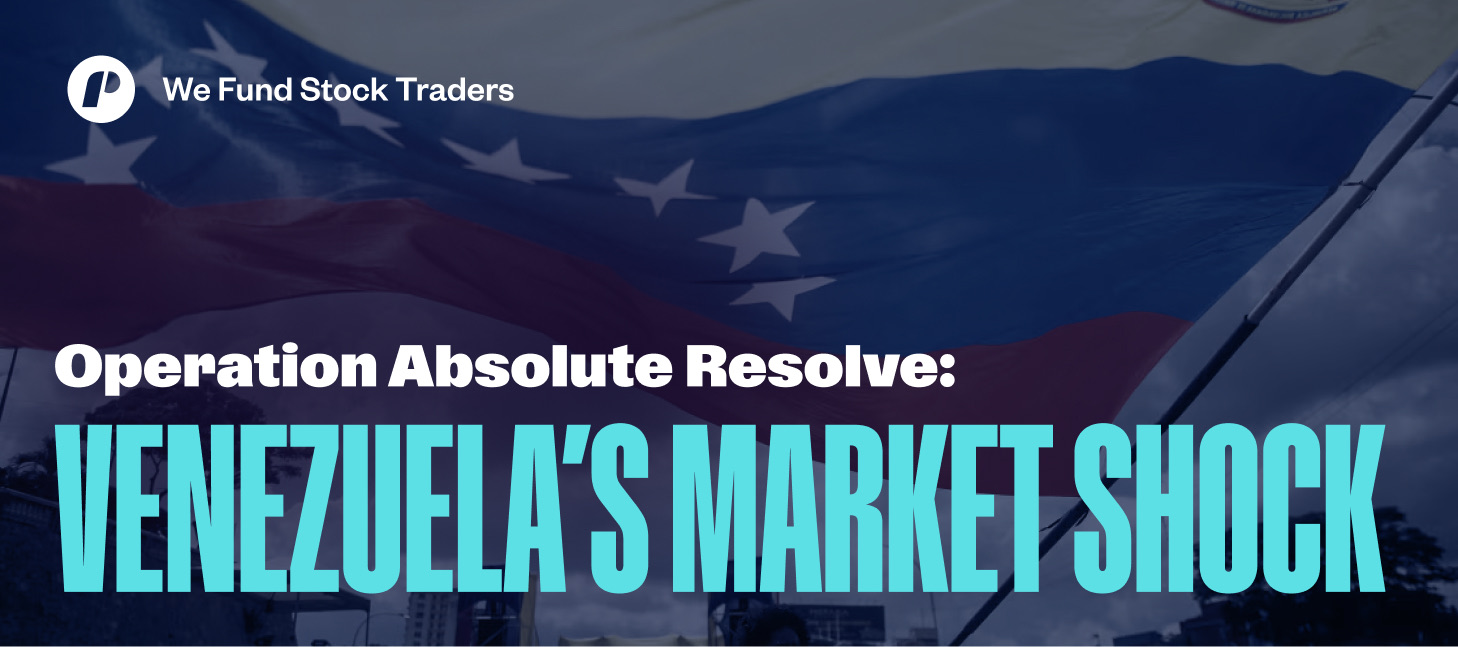
The execution of Operation Absolute Resolve on January 3, 2026, jolts global capital markets. U.S. Special Forces captured Nicolás Maduro and removed Venezuela’s long‑standing strongman from power. Investors now redraw the risk map for Venezuela, Latin America, and energy‑linked assets worldwide. Operation Absolute Resolve is not a one‑off headline. It marks the start of a longer, policy‑driven story. Washington has signaled that it intends to “run” Venezuela during a transition. U.S. officials also aim to oversee its vast oil reserves and key economic levers.
Investors are already asking whether Maduro’s capture is bullish or bearish for energy stocks. They are also asking how it will affect defense stocks and Latin American risk assets. Venezuela holds some of the world’s largest proven oil reserves, concentrated in the Orinoco Belt. Control over its post‑Maduro roadmap, therefore, matters for global sector leadership. In the first reaction phase, markets follow a classic pattern. Money moves risk‑off into safer assets and away from fragile emerging‑market names. At the same time, capital rotates risk‑on into selected U.S. sectors. These sectors include companies with leverage to energy, defense, and reconstruction themes.
Key Notes:
- Energy and Operation
- Defense Stocks
- Oilfield Services and Orinoco Reconstruction
- Cybersecurity, Infrastructure, Nation‑Building 2.0
Energy and Operation Absolute Resolve
U.S. energy giants sit among the primary potential beneficiaries of this geopolitical reset. The upside depends on how sanctions, contracts, and local politics evolve. Chevron (CVX) maintained a limited footprint in Venezuela under prior waivers. It now stands ready to scale upstream and midstream operations. That expansion requires a U.S.‑backed administration with clear, enforceable terms for foreign operators. ExxonMobil (XOM) and ConocoPhillips (COP) could compete for large contracts. Those contracts would focus on pipelines, refineries, and export terminals. Progress would be easier if legacy expropriation disputes saw resolutions or restructurings.
Venezuela holds the world’s largest proven crude reserves, centered in the Orinoco Belt. Actual output has lagged for years because of mismanagement and sanctions. Reconstruction under Operation Absolute Resolve does not simply flip production back on. The realistic path shifts from state‑run inefficiency to higher‑tech modular extraction models. Operators can ramp these modules as security, price, and legal conditions improve. Over time, that shift can move U.S. oil majors from trapped optionality to real capex and volume growth in Venezuela. Their stock performance would then reflect tangible projects rather than distant hopes.
This remains more complex than a simple “oil goes up” story. In the short term, crude can price higher geopolitical risk and possible supply disruptions. In the medium term, markets may start discounting future Venezuelan barrels. That requires credible reconstruction paths and enforceable contracts. Traders looking at oil and integrated majors will focus on relative strength. Names with Venezuelan leverage may outperform if the policy path looks durable. They still carry high headline risk and potential policy reversals, so sizing matters.
Defense Stocks and 2026 Posture
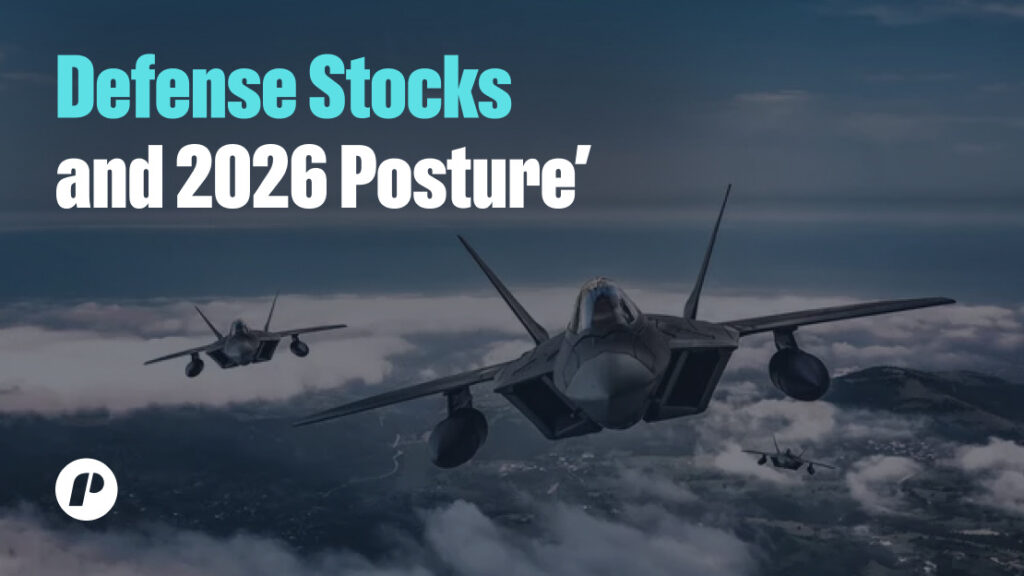
The defense sector views Operation Absolute Resolve as a live demonstration of U.S. rapid‑strike capability. The raid showcases the kind of long‑range force projection the 2026 budget aims to fund. Primes such as Northrop Grumman and General Dynamics could benefit. They stand to gain if the mission expands into longer stabilization and deterrence roles. Such roles would require surveillance platforms, secure communications, and armored mobility across the region.
The 2026 National Defense Authorization Act emphasizes rapid deployment, hypersonic systems, and resilient C4ISR networks. Those capabilities featured prominently in Operation Absolute Resolve. The raid does not validate the entire budget on its own. It strengthens the narrative for sustained spending on flexible forces and ISR platforms. That backdrop can support sentiment in defense names with strong reconnaissance, communications, ISR, and logistics exposure. Purely legacy platforms may see less direct benefit. Tactical trades after Maduro’s capture should recognize that much of the spending thesis was already priced in.
Oilfield Services and Orinoco Reconstruction
Post‑Maduro reconstruction creates a long-term setup for oilfield‑services stocks. Rebuilding and decarbonizing the Orinoco Belt demands deep technical expertise and patient capital. SLB and Baker Hughes are well placed to compete for that work. Their portfolios span AI‑assisted drilling, advanced completions, and carbon‑capture solutions. International service firms could receive invitations to upgrade fields and infrastructure.
Any credible reconstruction plan likely unfolds as a five‑ to ten‑year capex cycle. Spending would advance in waves as security, legal, and financing milestones are met. The pattern is not “turn the taps back on.” It is a greener heavy‑oil narrative that cuts flaring, leakage, and emissions intensity. That approach could make Venezuelan barrels more acceptable to ESG‑conscious portfolios than today. For traders, this supports a high‑beta thematic in diversified oilfield‑services names. Relative strength could favor these firms over pure‑play shale if tender news and sanctions relief appear.
Gold, the Dollar, and Safe‑Haven Flows
Gold and the U.S. dollar now sit at the center of the macro reaction. Operation Absolute Resolve lands on top of sticky inflation, tariff uncertainty, and several regional conflicts. Safe‑haven positioning was already sensitive to new shocks. The raid adds another layer of geopolitical risk to markets. Investors were already grappling with oil oversupply worries and a weak prior year for the dollar. Precious metals also saw sharp moves before Caracas.
Ahead of the first full trading session, traders expect turbulence across crude, gold, EM credit, and FX. They are reassessing sovereign and policy risk in Latin America. Early signs fit a familiar pattern. Regional risk assets face pressure, while perceived safe havens gain traction. The dollar is drawing renewed attention after its poor 2025 performance. Traders will watch whether Venezuela‑linked tension creates a sustained bid or just a short bounce.
Gold already delivered one of its strongest annual performances since the late 1970s. It now edges back toward record territory. Geopolitical stress and macro uncertainty continue to support safe‑haven demand. Venezuela’s official gold reserves add a further wrinkle. Investors now question how U.S. authorities will handle those holdings and related commodity flows after the raid. Spikes in geopolitical tension often lift gold into a higher trading range. That can happen even without immediate changes in rates or inflation data. Dollar traders will focus on whether safe‑haven flows into Treasuries and the currency persist. Those flows may fade if markets later judge the raid as contained.

Cybersecurity, Infrastructure, Nation‑Building 2.0, and Operation Absolute Resolve
Beyond oil, Operation Absolute Resolve opens a larger cyber and infrastructure story. Modernizing Venezuela will require more than wells and pipelines. The country must rebuild its power grid, transport networks, communications systems, and digital backbone. These systems were fragile even before the raid. Strikes on military and strategic targets have added further strain.
U.S. and allied tech firms specialize in cybersecurity, satellite communications, and critical‑infrastructure software. They are natural contenders to lead this modernization push. They can help secure Caracas’s grid and upgrade key industrial nodes. Their role depends on stakeholders agreeing to a workable reconstruction framework. A “Nation‑Building 2.0” agenda is emerging from Operation Absolute Resolve. It focuses on shielding critical assets from foreign cyber‑meddling and local sabotage. At the same time, it aims to lift connectivity and resilience step by step.
Venezuela’s history of high inflation and tight capital controls shapes the financial angle. Policymakers and innovators may test digital payments and limited DeFi tools. These experiments could stabilize some transactions and rebuild trust in financial rails. They would remain politically sensitive and highly experimental. Even so, they could influence policy choices and cross‑border flows. For traders, Operation Absolute Resolve turns Venezuela into a long‑dated optionality story. The main plays sit in cyber, infra‑software, satellite, and reconstruction‑linked names. The theme does not create a near‑term earnings trade. Venezuela‑linked positions in 2026 belong as high‑beta, headline‑driven satellites, not core holdings.
If you liked this post make sure to share it!