Used carefully, community discussion becomes a valuable context rather than distracting noise. Traders can compare opposing views on a stock, test personal biases, and refine entry or exit timing without giving up final responsibility. Effective participants usually read both bullish and bearish arguments before acting. They track how often community sentiment aligns with meaningful price moves over time. They also keep final order decisions within predefined risk rules instead of reacting to comments in real time. In this sense, social trading communities resemble research forums combined with live execution possibilities, offering insight that only turns into an edge when filtered through clear rules and consistent risk management.

Table of contents
Rising retail participation in stocks and other listed markets continues to reshape how traders search for ideas and manage portfolios. Mobile trading apps and constant performance screenshots push many traders toward idea-sharing and visible leaderboards inside social trading platforms. Traders increasingly wonder what the difference is between social trading vs copy trading in a stock-focused environment, because marketing often blurs the line between education and automation. Social trading creates a community-driven environment where traders share insights, strategies, and market opinions through feeds and discussions. This environment helps followers learn and make independent decisions about individual stocks, ETFs, and other instruments. Copy trading takes a more hands-off approach in which a leader’s positions automatically replicate in real time in the follower’s account. In essence, social trading emphasizes interaction and learning, whereas copy trading focuses on directly mirroring another trader’s actions across stocks, indices, or other assets.
Key Notes:
- How Do Social Trading Platforms Actually Work?
- Social Trading vs Copy Trading: What Is the Difference?
- How Does Copy Trading Work Step by Step?
- Main Advantages of Social Trading
- Main Risks of Social and Copy Trading
- Social Trading Communities Influence Decisions
- How Social Trading Fits Modern Trading Careers
What This Social Trading Guide Will Help You Do
A practical answer explains that social trading platforms combine trade-publication tools, performance statistics, and optional auto-copy modules. Followers can mirror or adapt leaders’ positions while retaining responsibility for position sizing, diversification, and loss limits on their own accounts. Therefore, this guide walks through how social trading platforms and networks operate for stock and multi-asset traders. It compares social trading vs copy trading, shows where profitability claims often break down, and maps common psychological traps. The guide then offers concrete checklists for choosing platforms, evaluating traders, and building a disciplined, risk-managed social trading strategy instead of chasing every “guru” in the feed.
It also shows how social trading platforms, communities, and copy features work in practice. Readers see how social trading vs copy trading differ in control, learning, and automation. The guide explains the main social and copy trading risks, psychological traps, and beginner mistakes, then outlines how to design a risk-managed social or copy trading approach that fits a broader trading plan.

How Do Social Trading Platforms Actually Work?
Social trading platforms usually organize information into clear sections that guide traders from exploration to execution across multiple instruments. They typically include stocks, ETFs, indices, and sometimes other assets in one interface. A typical workflow starts with the discover area, where users filter traders by instruments, returns, and risk scores. Some traders also filter by focus, such as large-cap stocks, growth names, or dividend portfolios. Every profile shows metrics like win percentage, maximum drawdown, average trade duration, and number of followers. This data helps traders avoid blind copying and recognize whether a leader’s style, stock universe, and risk profile suit their objectives and tolerance.
Key Platform Components Usually Include:
- Market access for stocks, ETFs, indices, forex, commodities, or sometimes cryptocurrencies.
- Community feeds with comments, trade ideas, and quick market reactions around specific tickers or themes.
- Copy or mirror modules that link follower accounts to chosen signal providers.
- Risk tools, such as allocation caps, maximum loss thresholds, and stop-copying triggers.
Once a user selects a strategy, the platform connects both accounts under predefined rules. When the leader opens or closes positions, signals flow instantly to the follower’s account. The system applies proportional sizing according to chosen limits and available capital. In practice, this structure turns social trading platforms into hybrid environments. Stock ideas, performance statistics, and automation tools combine there, while control over allocation and risk still remains with the individual trader.
Social Trading vs Copy Trading: What Is the Difference?
Traders often search for a clear explanation of social trading vs copy trading because platform marketing sometimes mixes both concepts carelessly. Social trading describes the broader environment where traders share ideas and discuss markets, then sometimes execute stock trades manually after reviewing community input and performance statistics. Copy trading, in contrast, focuses specifically on automatically replicating another trader’s positions in real time. That trader might run a concentrated stock portfolio, a diversified multi-asset approach, or a more tactical strategy. Both operate inside the same ecosystem, yet they feel very different in practice. Social trading emphasizes interaction and learning, while copy trading emphasizes automation and direct mirroring of another trader’s decisions.
A Clear Comparison Helps Remove Confusion:
| Concept | Social Trading Focus | Copy Trading Focus |
|---|---|---|
| Main Idea | Community, ideas, transparency | Automatic replication of trades |
| User Involvement | Higher: discussion, manual decisions | Lower: rules set once, then automation |
| Typical Tools | Feeds, comments, sentiment indicators | Allocation settings, risk limits, and mirroring |
Understanding this distinction matters because expectations and responsibilities change with each model. Traders who prioritize education and stock-picking skill-building usually favor social interaction, detailed commentary, and manual execution. Traders who prioritize convenience and automation lean more heavily toward copy modules. They still need to define allocation, diversification, and loss limits instead of assuming the system removes their responsibility. In practical terms, knowing how social trading vs copy trading differ helps traders align each approach with their goals and risk tolerance.
How Does Copy Trading Work Step by Step?
Copy trading converts another trader’s strategy into a signal stream synchronized with follower accounts. Many strategies center on stock portfolios or mixed-asset approaches that include ETFs and indices. The process begins when users explore leader lists sorted by returns, risk scores, or asset classes such as large-cap equities, sector-focused strategies, or diversified stock-and-ETF mixes. After selecting a candidate, they open the profile and review performance charts, trade history, average holding times, and drawdown periods. This information helps traders avoid decisions based solely on short-term profits and judge whether the leader’s style, volatility, and risk profile match their objectives.
- Capital allocation per strategy or per leader
- Maximum percentage of account equity per copied trade
- Global loss limits that stop copying beyond certain thresholds
Once activated, the system mirrors new positions as the leader trades and adjusts sizes to match the follower’s account. Closures follow the leader’s exits, though followers can override and close positions early to reduce risk or lock in gains. Over time, traders may add or remove leaders, rebalance allocations, and refine limits. Handled this way, copy trading functions less like blind following and more like hiring external managers inside a structured, rules-based portfolio.
What Are the Main Advantages of Social Trading?
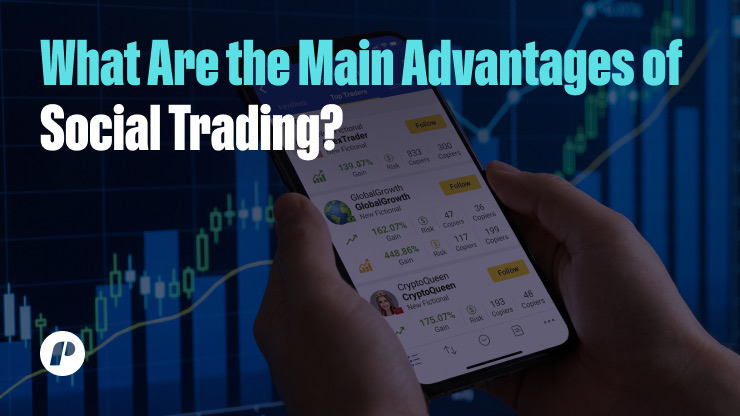
Many common questions ask about the benefits of social trading for beginners and experienced traders who focus on stocks and related instruments. Educationally, social trading exposes real strategies operating under real pressure rather than idealized textbook scenarios. Traders see how equity portfolios navigate earnings seasons, sector rotation, and news-driven volatility. They observe how different stock strategies handle drawdowns, react to company events, and adjust position sizing. This visibility compresses the learning curve because it shows how real traders manage changing conditions instead of only showing perfect examples.
Operationally, social trading saves time by centralizing ideas, statistics, and execution options in one interface. Some traders monitor markets full-time, while others balance trading with other responsibilities. Followers can still participate by adapting or selectively copying stock and ETF ideas that fit their plan. Social trading also broadens diversification possibilities because traders can allocate smaller amounts to different styles, such as growth-stock momentum, dividend-focused portfolios, or broader index-based strategies. Additional advantages include transparent statistics for evidence-based leader selection, community feedback that challenges questionable practices, and potential extra income for skilled leaders who share consistent, risk-aware stock strategies.
What Are the Main Risks of Social and Copy Trading?
Social and copy trading also involve specific risks that appear frequently in discussions among stock traders. One major problem occurs when beginners chase top short-term performers without analyzing risk metrics. These include leverage, drawdown depth, sector concentration, and trade frequency across individual equities and ETFs. They may discover strong recent returns, feel urgency, and allocate too much capital too quickly. When market conditions change, an earnings surprise hits, or a favored sector falls out of rotation, sharp losses can follow. The core risk is that traders focus on recent returns while ignoring the underlying volatility, concentration, and leverage that drive those results.
Further dangers arise from behavioral responses to volatility and drawdowns. Traders might abandon copied strategies exactly when drawdowns reach peak levels, crystallizing losses before potential recovery phases. Others copy several leaders who all focus on similar stocks, believing they have diversified when they actually concentrate risk. Key risk areas to monitor include overexposure to a single leader, sector, or correlated group of stocks.
Traders should also track maximum drawdown, volatility history, and typical holding periods. Misunderstanding the impact of gaps around earnings or major news events adds another hidden risk. Treating social and copy trading as low risk can create portfolios that appear diversified on the surface but remain fragile under stress because hidden correlations and leverage amplify moves during market shocks.
Problem–Agitate–Approach: Avoiding Typical Traps
A recurring concern in social and copy trading centers on unrealistic expectations created by screenshots, leaderboards, and selectively shared equity curves. Many traders enter these platforms hoping for effortless profits and focus almost exclusively on monthly return percentages. They ignore uncomfortable details such as drawdown length, position sizing rules, or sector concentration. They often join strategies at equity peaks and allocate aggressively based on recent stock performance. Normal drawdowns or adverse news events then produce losses that feel larger and more emotional than expected. The real trap lies in chasing impressive recent performance without checking how that performance was generated or whether it fits personal risk limits.
This emotional tension frequently leads to rapid switching between leaders and constant setting changes. Portfolios start to reflect reactions rather than coherent plans. Instead of holding strategies through full cycles, traders lock in losses at the worst moments and then chase new “stars,” repeating the same pattern. One practical approach involves reversing the process. Traders first define personal risk rules, time horizon, and drawdown tolerance in clear numbers. They then search for leaders whose histories fit those parameters rather than starting with the highest returns list. By treating social and copy trading as tools for implementing predefined objectives instead of substitutes for planning and discipline, traders reduce impulsive decisions and build more coherent, stock-focused portfolios over time.
How Do Social Trading Communities Influence Decisions?
Social trading communities function like dynamic trading floors where sentiment, ideas, and emotions move quickly around specific stocks, sectors, and themes. When influential profiles share bullish arguments on a popular stock or industry, many followers may align simultaneously. This alignment can increase attention and sometimes contribute to crowded positioning around breakouts or key news events. However, the same community pressure that highlights opportunities can also push traders toward overconfidence or fear-driven exits. Decisions can begin to follow group sentiment rather than a personal stock trading plan. Community influence becomes risky when traders outsource conviction and risk decisions to the crowd instead of using the discussion as one input within a structured process.
Many beginners ask a simple but crucial question about how to start with social trading when they mainly trade stocks. An effective path begins with observation instead of immediate capital deployment. New traders spend time exploring leader profiles, reading strategy descriptions, and simulating decisions using demo or very small live allocations. This observation phase shows how different equity-focused leaders behave across calm sessions, trend days, earnings releases, and broad risk-off moves. It helps beginners judge whether a strategy’s style and volatility truly fit their tolerance before they commit meaningful capital.
Once comfortable with the interface and data, beginners can start with very small live allocations. They treat copied strategies as structured experiments rather than final solutions. Helpful habits include limiting risk per strategy and per day, and reviewing weekly results and drawdowns instead of reacting to single trades. Many find it useful to keep a short journal describing why they follow each leader and how each stock or portfolio fits their plan. By approaching social and copy trading as a long-term learning process built around clear risk rules, beginners shift from chasing quick stock profits toward building consistent, evidence-based decision frameworks supported by community insight and performance statistics.
Stocks, Forex, and Social Trading: Where Does It Really Fit?
Social and copy trading initially gained traction in spot forex, yet many platforms now integrate stocks, ETFs, indices, and sometimes futures alongside currencies. For stock traders, social trading becomes particularly relevant because it reveals how experienced investors build and adjust equity portfolios around earnings cycles, sector themes, and macro events. Traders can also see how they size positions and handle volatility in individual names. Observing how skilled stock traders manage entries, exits, and risk across different market conditions provides practical education that would otherwise require extensive solo experimentation and backtesting.
Risk still scales with the underlying instruments and any leverage involved, even when accounts focus mainly on stocks or stock CFDs. When followers mirror aggressive strategies without understanding position sizing, concentration risk, and the impact of gaps around news or earnings, losses can escalate quickly and feel disproportionate to expectations. Therefore, traders integrating stocks within social or copy trading often adopt stricter filters.
They may use a lower maximum allocation per leader and prefer strategies with documented risk caps. They also monitor positions more closely during major company or macro announcements. Used thoughtfully, social and copy trading can reshape the stock trading experience by combining shared expertise, platform tools, and personal discipline. The workflow still relies on clearly defined risk limits and objectives.

Final Perspective: How Social Trading Fits Modern Trading Careers
Social and copy trading represent an evolution from isolated chart watching toward collaborative, data-driven</a> participation in global stock markets and related assets. Platforms, communities, and copy features together create an ecosystem where strategies become visible, comparable, and, when desired, directly replicable. Traders can observe how different equity approaches behave through full market cycles rather than only during short performance bursts. For traders dealing with complex stock universes, sector rotations, and cross-asset influences, social and copy trading add important support. They act as research laboratories and execution assistants alongside traditional discretionary or systematic methods.
The difference between sustainable use and disappointment rarely depends on the platform itself. It usually depends on how traders define objectives, evaluate leaders, and enforce risk rules before copying any stock or portfolio. Traders who clarify their time horizon, maximum drawdown tolerance, and diversification targets tend to align social and copy trading more naturally with broader plans. They use community tools to implement their process rather than replace personal responsibility. When traders combine community insight, robust statistics, and disciplined position sizing, social and copy trading become more effective tools. They can support learning and performance stability without changing the underlying market risk. These tools still operate in changing stock market environments and never remove risk.
If you liked this post make sure to share it!